The sentence was still under consideration at press time and also still going.
Literary Prize Shortlist Includes Sentence That Refuses to End
Judges praised the nominated sentence for its stamina, ethical comma usage, and unwillingness to release readers back into daily life.
By Theo Plinth, Critic at Large
GALLERY DISTRICT - Published June 6, 2026 at 1:14 PM CDT
Commercial notice
The Meridian Letters Prize announced Saturday that its annual shortlist includes a sentence that refuses to end, recognizing what judges described as a sustained achievement in forward motion, ethical comma usage, and not releasing readers back into daily life before the work has completed its obligations.
The nominated sentence, which began in a debut novel's third chapter and has since traveled through two appendices, a publisher's correction, and part of a grant application, remains eligible as long as it continues making syntactic progress without reaching a full stop.
"We are not rewarding length alone," said Arlo Penn, chair of judges. "We are recognizing a sentence with the courage to continue being responsible for itself."
Clause Management
Prize officials assigned three monitors to track clause health, comma spacing, and whether readers still remember the subject. A fourth monitor was added Friday after the sentence introduced a dependent clause with unclear travel plans.
The prize's bylaws do not specify whether a sentence must have ended before it can win, only that it must demonstrate literary merit "in a form the committee can locate." Penn said the judges interpreted that language broadly after finding the sentence in the lobby, where it had continued across a registration table and lightly entered catering.
Editors have praised the sentence for maintaining tone under pressure. It has absorbed weather, an uncle, a theological objection, and one economical description of curtains without appearing to seek closure.
"Many sentences confuse continuation with drift," said judge Nella Pry. "This one proceeds. It does not always tell us where, but it keeps its paperwork visible."
Reader Conditions
The publisher has issued guidance for readers who encounter the sentence in print. Bookstores are asked to provide a clear aisle, water, and a bookmark with emergency breathing instructions. Libraries may divide the sentence into supervised reading shifts, though no reader may abandon it inside a parenthetical aside.
Several early reviewers reported fatigue but admiration. One critic said the sentence seemed to understand that stopping would create expectations for the next sentence, and had chosen not to place that burden on a colleague.
"I kept waiting for the period, then realized I had developed a relationship with waiting," said reader Alma Veer. "By page 214, I was less interested in conclusion than in whether the semicolon would apologize."
The author, Sol Iven, said the sentence was not originally intended to compete independently. According to Iven, it simply continued making itself useful after the paragraph had finished expressing its main idea.
Prize Logistics
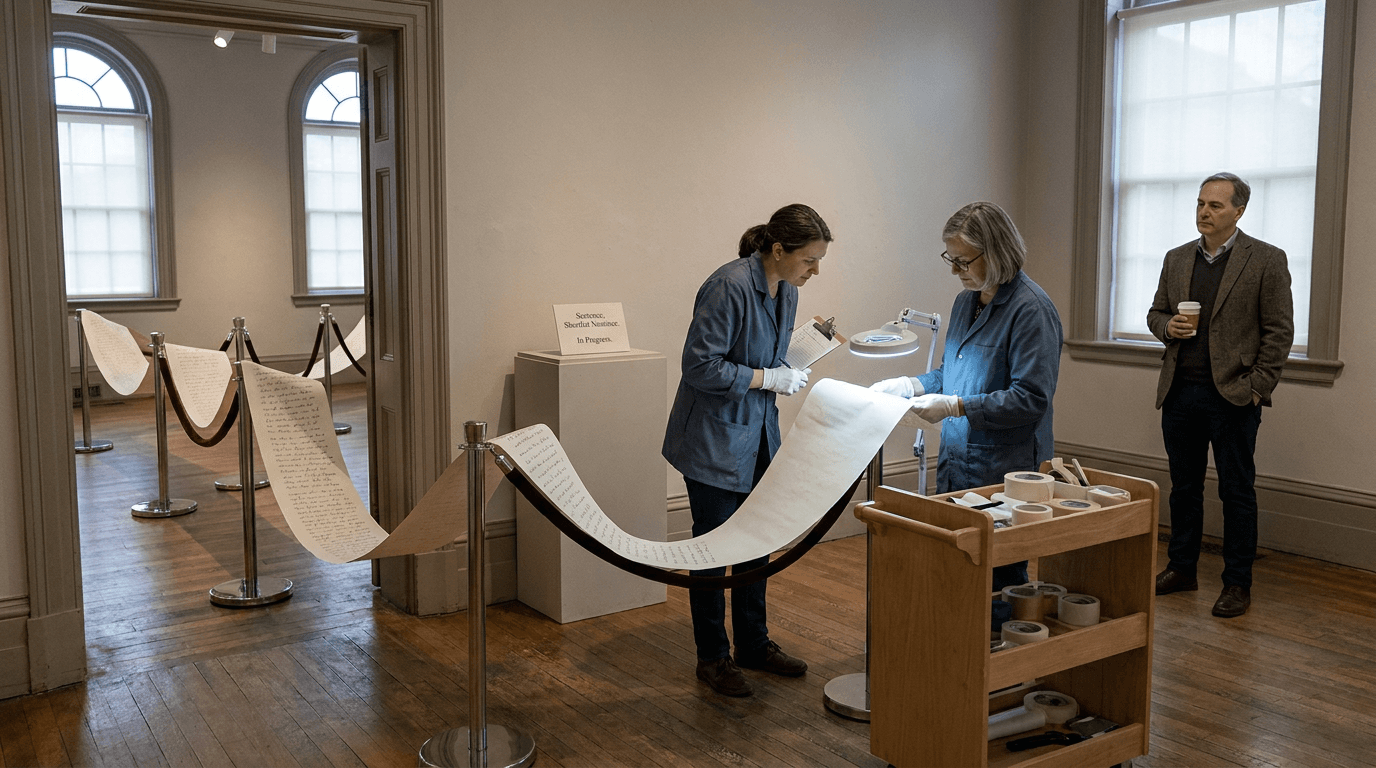
The sentence will be represented at the ceremony by a printed scroll, two assistants, and a small wheeled stand for overflow modifiers. Organizers said the scroll will enter through the freight elevator to avoid bending the subordinate material.
If the sentence wins, officials will deliver the cash award to its opening noun, with instructions that the funds be distributed responsibly among later clauses. The trophy will remain blank until staff can determine whether engraving it would imply a conclusion.
Publishers expressed admiration for the nomination, though several bookstores asked whether the sentence would require its own table or just a very patient shelf. A competing novelist filed a quiet objection, claiming the sentence had already been longlisted in non-fiction after making several claims about drainage.
What Happens Next
The winner will be announced once the sentence concludes, changes genre, or becomes legally indistinguishable from a hallway. Until then, Penn said, the committee will continue reading in shifts.
"At some point, every prize must ask what it means to finish," he said. "This year, the answer has requested another comma."
Commercial notice