A dish that must be consumed should at least be consulted.
The Main Course Has Been Silent Long Enough
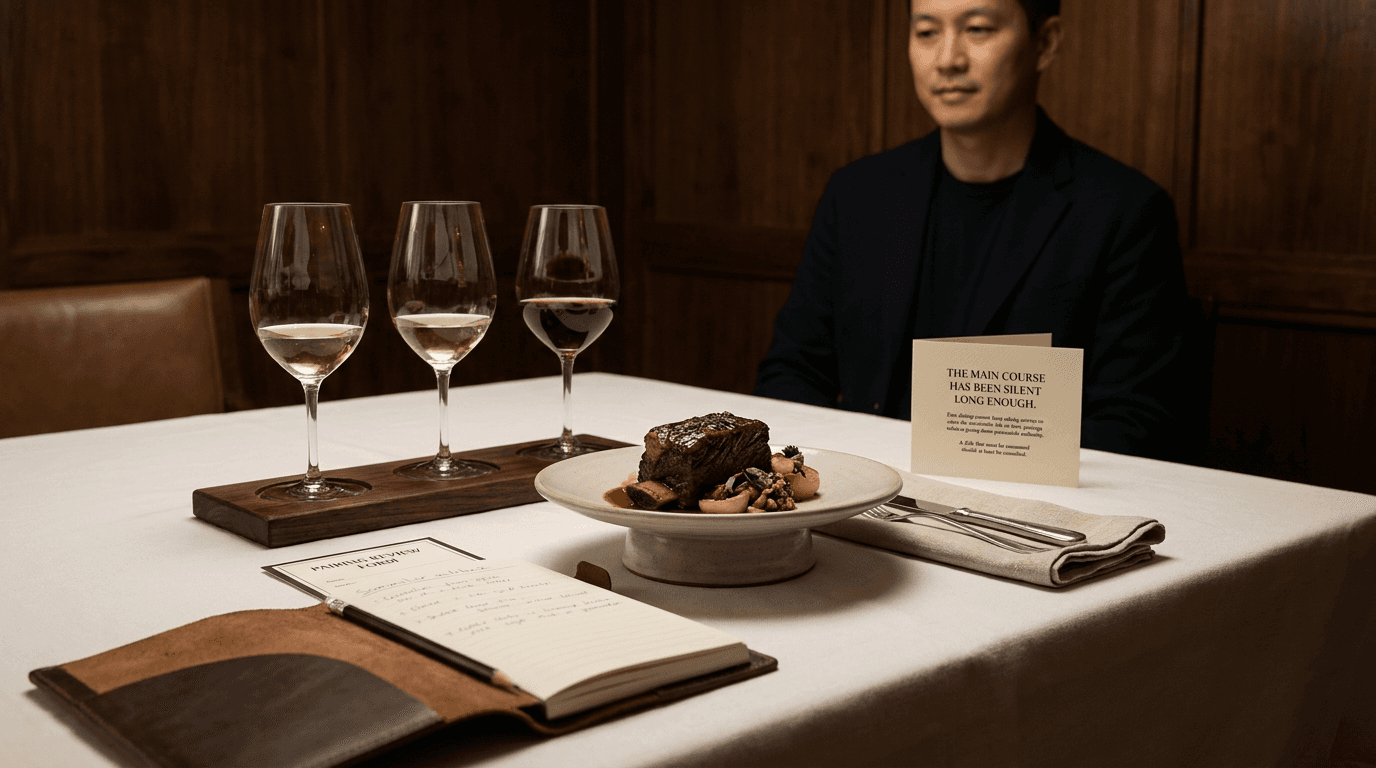
Fine dining cannot keep asking entrees to carry the emotional risk of wine pairings without giving them procedural authority.
By Lenora Brine, Food and Recipe Correspondent
DINING DESK - Published June 6, 2026 at 9:28 PM CDT
Commercial notice
For generations, fine dining has asked the main course to absorb the consequences of wine decisions made over its head. The entree is plated, presented, praised, cut into, and only then asked to endure whatever bottle a human has decided sounds appropriate near the word mineral.
This arrangement is no longer defensible. A dish that must carry the pairing should have standing in the pairing.
Consultation Is Basic Decency
The sommelier is trained. The diner is paying. The chef has labored. None of this changes the fact that the main course is the one seated directly beneath the wine's ambition. It has the sauce. It has the texture. It has the immediate knowledge of whether a glass is approaching with too much confidence.
We do not need to sentimentalize food to recognize procedural fairness. We need only admit that a plated entree has more at stake than the person saying, "That sounds nice."
The Fear Of Slower Service
Critics will argue that entree approval slows the meal. They are correct. Many necessary standards slow things down. Fire exits slow architecture. Receipts slow regret. The question is not whether dinner becomes slower, but whether it becomes more honest about who is being paired with whom.
If a steak declines a wine, perhaps the wine should reflect. If a fish asks for something quieter, perhaps we have learned something about the room.
A Modest Reform
Restaurants should begin with one consultative course per service. Let the main course review the glass. Let the sommelier wait. Let the diner experience the humility of sitting between two forms of taste and realizing neither one was elected.
Commercial notice