A little ambiguity is healthy. This is different.
I Support the Fog, but Not Its Tone
Fog is essential to civic atmosphere, yet recent banks have adopted an intimacy and posture the city can no longer ignore.
By Cassian Docket, Opinion Editor
OPINION DESK - Published June 6, 2026 at 7:45 PM CDT
Commercial notice
I support the fog. I want that stated clearly before the fog's defenders begin their usual work of standing near a window and implying I have never loved ambiguity.
Fog has an important civic role. It softens construction sites. It gives bridges time to reconsider their public image. It allows a streetlight to look briefly employed by a more serious department. A city without fog would be too legible, too available, too willing to let every building finish its sentence.
But recent fog events have crossed a line. They have arrived too close to windows, stayed through breakfast, and adopted a tone that can only be described as having read the correspondence.
Ambiguity Needs Distance
The city should establish tone guidelines distinguishing atmospheric softness from undue familiarity. A bank of fog may obscure a corner, delay a skyline, or give a park bench the privacy it has earned. It should not press itself against glass with the confidence of a person who knows why the porch light was left on.
Residents understand this difference. We know when fog is providing mood and when it is asking follow-up questions. We know when a gray morning is a public service and when it has begun making the alley feel like a childhood memory that wants to discuss boundaries.
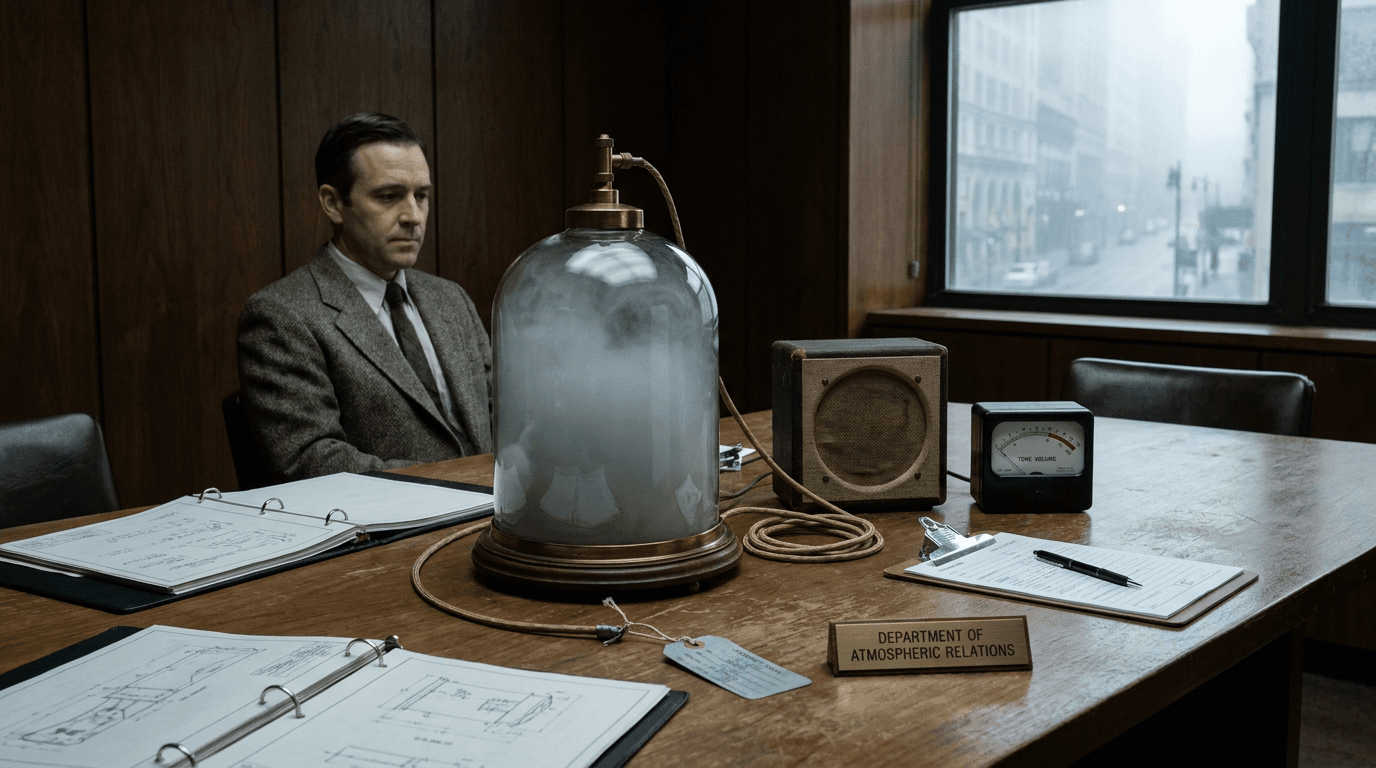
Fog banks could be evaluated for distance, density, and whether they make streetlights feel like they know something. The Department of Civic Atmosphere already inspects banners, holiday wreaths, and the confidence level of public fountains. It can handle vapor with an attitude.
A simple three-tier system would work. Category One fog may hover politely and improve photographs. Category Two fog may reduce visibility but must remain neutral in its emotional implications. Category Three fog, the kind that turns a mailbox into a witness, would trigger a review within 48 hours.
The Weather Lobby
Some will call this anti-weather. It is not. It is pro-boundary, pro-window, and pro-responsible grayness.
The weather lobby has spent years insisting that any criticism of tone is an attack on natural process. This is convenient for weather, which has long avoided accountability by arriving from several directions at once. Rain has permits. Wind has advisories. Heat has indexes. Fog has been allowed to operate as a mood with no paperwork.
That cannot continue. The fact that fog is beautiful does not exempt it from basic standards of address. Many things are beautiful and still required to stand a few feet back.
There is also the matter of equity. Waterfront neighborhoods receive fog with vocabulary: marine layer, morning cover, coastal character. Inland blocks receive the same fog and are told to be careful near intersections. Tone guidelines would ensure that fog does not reserve tasteful mystery for people with decks while offering everyone else damp suspicion.
A Respectful Grayness
The solution is not prohibition. A fog ban would be crude, expensive, and likely unenforceable without enormous fans. We should instead create a civic atmosphere board with seats for meteorologists, window cleaners, bridge operators, and one resident who can reliably tell when the air has become personal.
The board would publish standards. Fog should not linger outside bedrooms after 7:30 a.m. unless invited by season. It should avoid forming shapes that suggest unfinished errands. It should not make parked cars look like they are keeping counsel.
Let fog serve the city, but let it do so from a respectful distance and without the tone. A little ambiguity is healthy. This is different.
Commercial notice