Researchers said the pause contains no organic uncertainty.
Lab Creates Synthetic Pause Indistinguishable From Natural Hesitation
The manufactured pause can be inserted into conversations, meetings, and apology drafts without listeners detecting its origin.
By Dr. Veda Sill, Science and Technology Correspondent
INSTITUTE CORRIDOR - Published June 6, 2026 at 5:46 PM CDT
Commercial notice
Researchers said Saturday they have created a synthetic pause indistinguishable from natural hesitation, giving institutions a reliable way to appear thoughtful without depending on actual uncertainty, reflection, or the availability of a human conscience at the time of use.
The pause, developed by the Institute for Acoustic Materials, can be inserted into conversations, earnings calls, apology drafts, medical portals, and workplace meetings where an immediate answer would suggest either panic or dangerous competence.
According to the lab, listeners could not tell whether the silence was produced by a person reconsidering their words or by a calibrated delay grown under controlled conditions.
"Natural hesitation is inconsistent," said Dr. Ren Voss, the acoustic uncertainty chemist who led the project. "It varies by temperament, caffeine level, guilt history, and whether the person has already decided to say no. Our pause gives organizations a cleaner supply."
Building The Pause
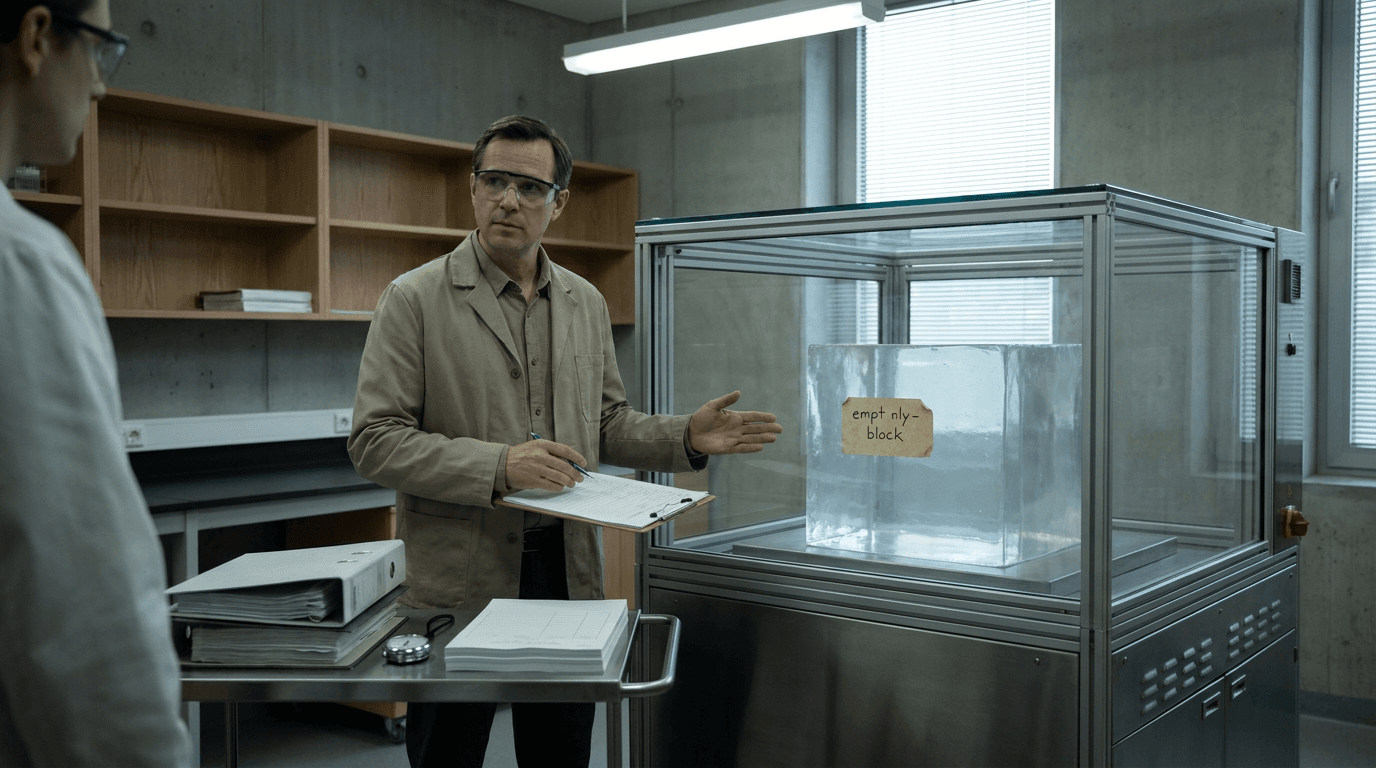
The team produced the pause inside a sealed chamber lined with felt, outdated meeting notes, and one chair positioned slightly too far from the table. Researchers introduced held breath, soft eye movement, a trace amount of unresolved email, and a low-voltage memory of being asked to speak first.
The resulting silence lasted between 0.8 and 4.3 seconds before degrading into strategy.
To test authenticity, the lab placed synthetic pauses inside recorded statements such as "we hear your concerns," "that is an interesting proposal," and "I am sorry you experienced that." In double-blind trials, listeners rated the pauses as human, reflective, and "probably hiding something, but in the normal range."
The institute said the pause contains no organic doubt. It is composed primarily of compressed social air and can be stored at room temperature if kept away from direct accountability.
"The main technical challenge was preventing the pause from becoming a silence," Voss said. "A silence has legal and emotional properties we are not prepared to manufacture."
Early Demand
Law firms, customer service departments, theater directors, and several universities have requested samples. A procurement officer for a regional hospital system said synthetic pauses could help reduce the burden on administrators who currently have to generate thoughtful delays by looking down at folders.
Workplace software companies are also exploring integration. One proposed feature would automatically place a pause after every message beginning with "circling back," allowing recipients to feel briefly considered before receiving the same request.
Ethicists said the technology raises questions about consent, especially if synthetic hesitation is used to simulate empathy in settings where a person reasonably expects the delay to have passed through a human being.
"A pause tells the listener that something happened inside someone," said Dr. Lale Chen, who was not involved in the study. "If nothing happened, the listener should at least be offered a receipt."
The institute responded that each commercial pause will include a batch number, though not necessarily in a location where conversation participants can see it.
Next Applications
Researchers are now developing a longer pause intended for award ceremonies, difficult brunches, and family discussions where someone has said they are "not mad" while remaining in the room.
The lab is also testing a premium hesitation with a slight inhale at the front, though early versions caused subjects to apologize before anyone had spoken.
For now, Voss said synthetic pauses should be used sparingly and only where ordinary speech already requires maintenance.
"We are not trying to replace human uncertainty," he said. "We are providing coverage during shortages."
Commercial notice