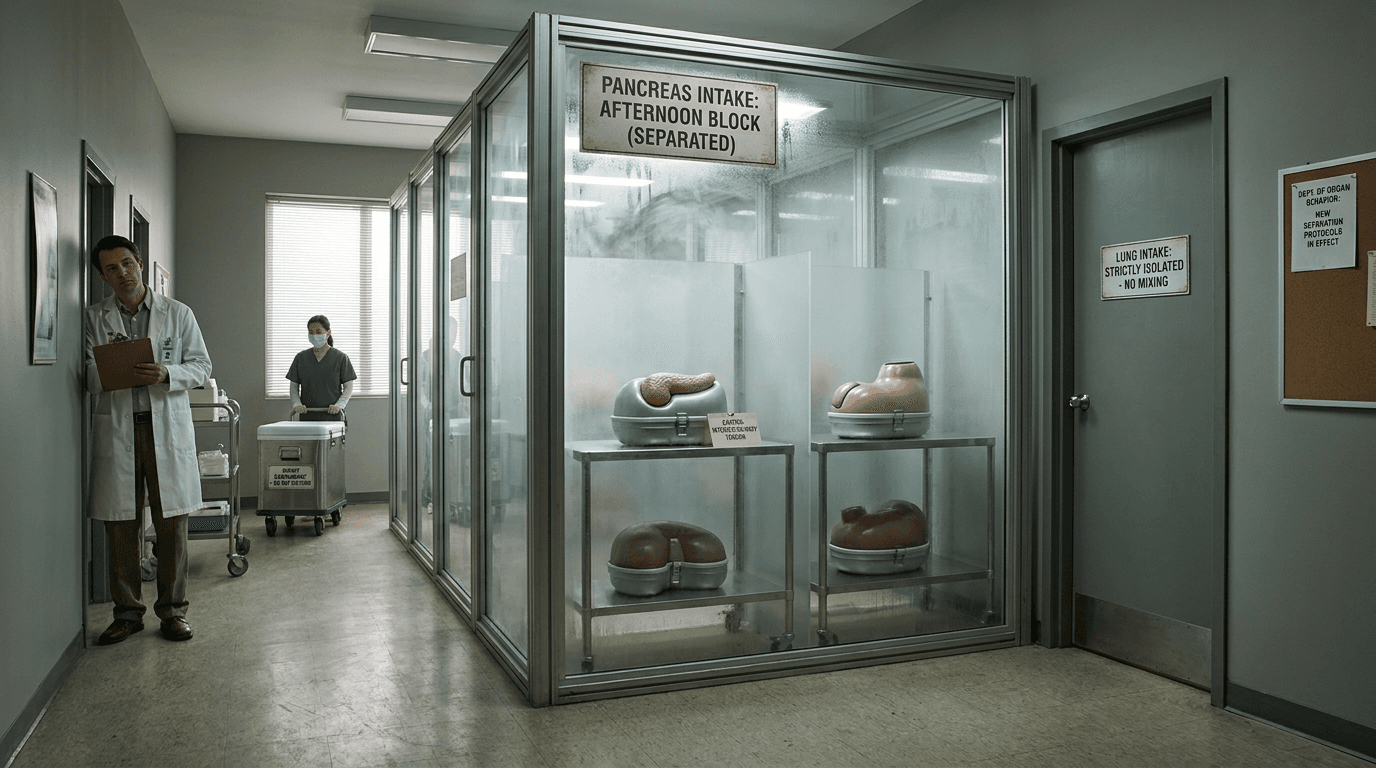
Administrators said the pancreas-only afternoon block has been calmer.
Medical School Opens Unit for Organs That Refuse to Share a Waiting Room
The teaching hospital says lungs, kidneys, and several pancreases now require separate intake areas after showing poor interdisciplinary tolerance.
By Dr. Veda Sill, Science and Technology Correspondent
INSTITUTE CORRIDOR - Published June 6, 2026 at 9:06 PM CDT
Commercial notice
A teaching hospital opened a new intake unit Saturday for organs that refuse to share a waiting room, citing repeated incidents of poor interdisciplinary tolerance among lungs, kidneys, and several pancreases.
The unit assigns separate seating areas to referred organs based on function, temperament, and the amount of time they can remain near one another without making the room difficult for residents. Hospital administrators said the change follows months of hallway delays during which organs appeared medically compatible but socially unwilling.
"The body teaches teamwork, but the waiting room reveals limits," said Dr. Vessa Harn, associate dean for clinical placement. "Some organs need distance before consultation."
Temperament Screening
Under the new protocol, organs arriving for academic review are placed in clear clinical containers and evaluated using the Interdepartmental Tolerance Scale. Lungs are generally seated near windows. Kidneys prefer corners. Pancreases receive appointment folders in advance so they do not feel ambushed by the schedule.
Residents are trained to avoid comparative language, especially phrases such as essential, hardworking, or behind the stomach. The hospital said these words can affect seating behavior.
"No one is saying the organs are difficult," Harn said. "We are saying they have intake preferences."
Teaching Impact
Medical students said the unit has clarified the emotional infrastructure of anatomy. One resident said he had never considered whether a spleen might need a magazine before being discussed by strangers.
The hospital reported shorter delays since the unit opened, though a pancreas-only afternoon block was added after mixed seating created what administrators described as "a small but memorable atmosphere."
Expansion
The school is considering separate check-in windows for bones that arrive with strong opinions about alignment. Administrators said the goal is not to indulge every anatomical request, but to keep the waiting room usable until the body can be studied in sections.
Commercial notice