The button was praised for sounding sorry without altering municipal outcomes.
City Installs Crosswalk Button That Apologizes Before Not Changing
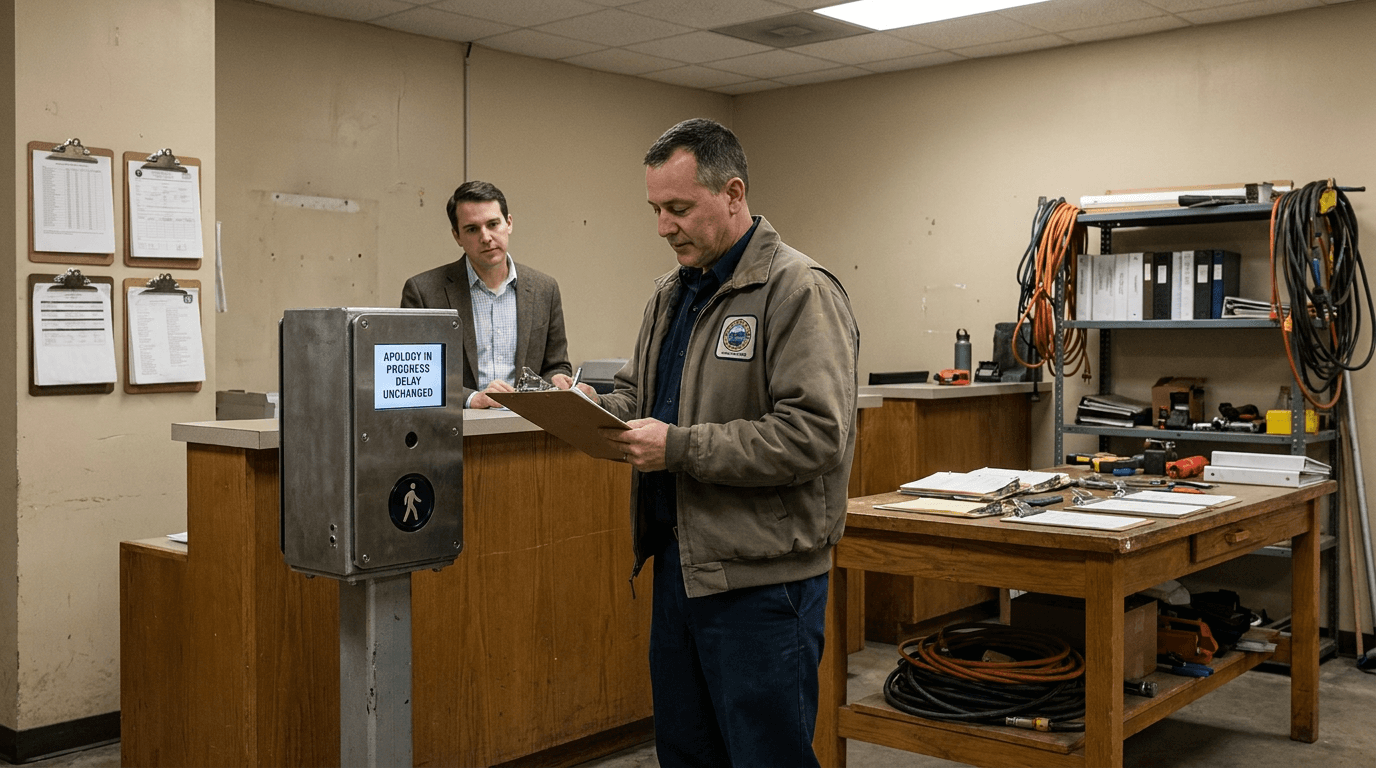
The pedestrian signal offers a brief apology, accepts responsibility for the delay, and then continues giving traffic the confidence it already had.
By Mara Vellum, Politics and Civic Procedure Editor
JULIARD CITY - Published June 6, 2026 at 7:17 AM CDT
Commercial notice
City officials said Saturday that a crosswalk button that apologizes before not changing is now part of municipal policy, after residents reported that ordinary pedestrian signals had become emotionally evasive about their lack of influence.
The new button, installed at Wexler Avenue and Ninth, emits a warm tone, accepts limited responsibility for the user's disappointment, and then allows traffic to continue moving under the signal plan already approved by the Traffic Timing Board in March.
"People deserve to know their request has been heard, even when the avenue has already made other arrangements," said Oren Silt, assistant commissioner for crossings. "This is not inaction. This is accountable waiting."
According to Silt, the city began studying apology-enabled buttons after a pedestrian survey found that 68 percent of respondents believed the previous buttons were either decorative, indifferent, or "aware of something they were refusing to share."
Acknowledgment Protocol
Each press now triggers a three-step acknowledgment protocol. First, the unit confirms physical contact. Second, it states that the pedestrian's desire to cross is valid within the limits of the intersection. Third, it returns the light cycle to its original priorities, where northbound vehicles remain highly favored.
The button does not promise a walk signal. It apologizes for the delay, logs the request, and briefly illuminates a small amber ring that officials said should not be interpreted as hope.
"The ring means the button is present with you," Silt said. "It does not mean the city has chosen you."
Engineers said the system was designed to reduce repeated pressing, which had placed emotional strain on older buttons and caused several to develop loose housings that sounded sarcastic in winter.
At The Corner
By midmorning, pedestrians had begun forming opinions about the upgrade. Some said the apology made the wait feel more deliberate. Others said the intersection was still clearly loyal to cars but had learned the vocabulary of regret.
"It said it was sorry, and then nothing happened for almost a full minute," said Lavinia Pike, who was carrying dry cleaning and a pear. "That is more or less how the city communicates in writing, so I believed it."
Delivery cyclist Toma Venn said the button's tone seemed sincere but insufficiently empowered.
"I don't blame the button," Venn said. "You can tell it works in a larger system."
The city has posted a temporary sign explaining that pedestrians should press once, listen fully, and avoid arguing with the speaker unless they have submitted a formal reconsideration of curb access.
Wider Rollout
Transportation officials said the pilot will run for 90 days, with special attention to rain, school dismissal, and the period immediately after a bus drives through the intersection while making meaningful eye contact with everyone waiting.
If successful, apology hardware could be added to 40 more crossings by fall. The city is also reviewing whether elevator door-close buttons in public buildings should begin acknowledging that they were never given operational authority.
"We cannot make every button powerful," Silt said. "But we can make every button careful about the facts."
Commercial notice